
I’m on day 34 of a writing challenge, and I would be lying if I said it was smooth sailing the entire time. About 2/3 of the way through October, I came down with a nasty cold. These are my reflections on powering through writing when I felt like doing anything but.
It is inevitable: if you undertake a nine-week writing challenge, at some point you’re going to get sick. Especially if this undertaking happens during the fall as the weather starts to get cold and you spend more and more time indoors. Especially especially if you’re a teacher and have three kids at two separate schools. The germs are coming for you no matter what, so the question now becomes, how will this inevitable cold affect your writing challenge?
Too Sick to Write
I have lost entire NaNoWriMo challenges over the years thanks to an ill-timed cold that struck me down at the precise moment when I was losing confidence in my story and completely destroyed my momentum. I know what it feels like to be too sick to write. Fever, chills, and muscle aches make it impossible for me to do anything of consequence. Certainly not anything that requires me to make a decision, and writing a first draft is all about decisions. Even without those more severe symptoms, I still struggle to perform intellectual or creative activities if my nose is stuffed up. I just can’t write with a cold, period.
So what should I do when one strikes during a writing challenge? If I’m too sick to write for a few days to a week, how do I keep from losing momentum during the break? How do I pick back up again from a dead halt if it comes to that? After trying to keep up with RAWR while having a cold a few weeks ago (and getting right back into the game after I recovered), here’s what I came up with.
Please note:
These are my reflections based on personal experiences writing with respiratory viruses, and may be helpful advice for others coping with similar infections during writing challenges. I do not have experience writing with more severe or chronic illnesses, and my use of the term “sick” is not intended to encompass the full range of sickness, but only the short-term infections that are more disruptive than serious.
Permission to Fail?
I don’t like this phrase. A year ago I was trying to embrace it, reflecting on how I struggled with the concept but understood its value for productivity. I wrote about that here: (“No Time? Write a Novel Without Sacrificing your Health”). Now, though, I’m just going to flat-out reject it. All corniness of its cultural connotations aside, I just don’t think it’s very helpful. How does giving yourself permission to fail at something make it any easier to succeed? It doesn’t. If you have a goal in mind, giving yourself permission to fail might make you feel better if you fail to meet that goal, but it doesn’t change the fact that the goal is still unmet. It does not help you at all.
But shouldn’t you give yourself permission to fail when you’re sick? Not if that sanctioned failure destroys your motivation and causes you to abandon your project, as happened to me on multiple occasions. Instead, I argue, you should learn to manage your expectations. Certainly you should not expect to accomplish the same work when you’re sick as when you’re at your best, but you probably don’t expect to fail, either. So if you get sick during a writing challenge, please do me a favor and don’t give yourself permission to fail. Manage your expectations instead.

Manage Your Expectations
Once, when I was a freshman in college, my dad advised me to manage my expectations. I don’t remember what I was supposed to manage my expectations about at the time, but it became one of my most valued pieces of advice (along with two others, also from freshman year: “walk left, stand right” on the escalator down to the DC Metro, from my first upper-classman friend I met at move-in, and “Take what you want to take,” from my favorite professor on choosing classes — this last piece of advice I regularly confer on the students I teach).
To manage your expectations, you first need to know what you can expect normally. If you write 1000 words without much effort on a normal day, it’s probably not reasonable to assume you can do the same while you’re sick. So an adjustment about the quantity of your writing is in order.
But you also need to manage your expectations with respect to the quality of writing. The brain fog that comes with nasal congestion is real, but instead of saying, “I can’t write while I’m having trouble forming coherent thoughts,” just lower your expectation for how good the writing of that particular part of the story is going to be when you return to it in revisions. After all, this is a draft, and it will be rewritten. There’s nothing wrong with leaving a note to your future self saying, “I was sick when I wrote this chapter. Be gentle!” The prose may be lackluster while you aren’t at your best, but the words are still worth writing if they contribute to that draft.
Finally, you need to manage your expectations about the writing challenge as a whole, especially if you fall behind on your goal timeline while sick. Are you so far behind you don’t think you’ll meet your word count goal? Maybe it’s time to adjust that goal, not so much that the goal becomes meaningless, but just enough that you’re not automatically disqualified by sickness. Or if finishing the story during the writing challenge is what’s most important to you, then maybe plan to work on plotting or adjust the pacing once you’re feeling better. “Making up for lost time” shouldn’t be as simple as catching up on lost word count. That enterprise may be doomed to failure. But if you adjust your expectations about what catching up looks like, you will set yourself up for getting back on track successfully.
So when you get sick this month (I say to all the writers out there writing in November!), and you will, please try to manage your expectations and keep writing. (And if you don’t get sick for all of November, let me know. I’ll probably give you a virtual high five or a cookie or something. Go you!)
What I’m Writing
I just finished revising Chapter 2 on my academic book about Christ’s flesh in Merovingian Gaul. (This is exciting, I promise.) Tomorrow I’m starting revisions to Chapter 3.
In the fiction world, I’m a little over 2/3 of the way through a first draft of Taming the Beast, the sequel to Breaking the Silence. I’m completing it during the months of October and November with the Rogue’s Amazing Word Rush challenge (RAWR). Despite a week-long cold, the end of quarter grading period, and random days the kids are off of school, I am making steady progress. I will have more to report at the end of November once I finish this draft!
What I’m Reading
I finished Beowulf (both the original and the graphic novel version), and then decided to read Grendel. I had heard of this book but never read it. When I saw the school library had decommissioned it over the summer, I picked it up off the free books cart and decided to save it for after my Beowulf reread, which is now. (My thoughts are below the book cover, and they do contain spoilers, so stop here if you don’t want to be spoiled.)
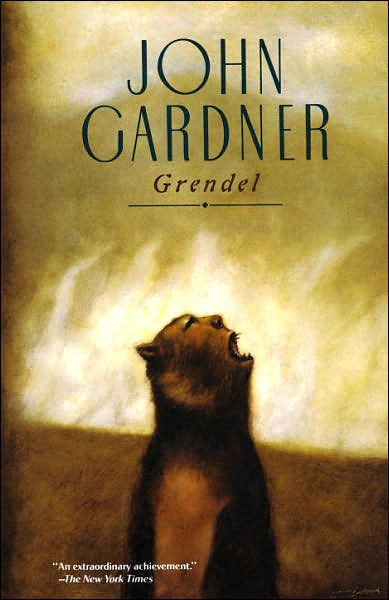
It is….. literary. I guess I could have seen this coming. It is assigned in high school literature classes. I don’t normally read this genre, but it’s interesting. I’m enjoying the story narrated from the monster’s perspective. I also like that Grendel and the dragon are talking to each other. The portrayal of the dragon was certainly a choice — immortal, eternal, and all-knowing — but the interplay between the humans as lower creatures, the dragon as the highest creature, and Grendel occupying the space in between is interesting.
I haven’t gotten to the end yet, and in fact at the midpoint the character of Beowulf has not yet arrived at Heorot, but I’m interested to see where Grendel’s mother fits into this hierarchy. So far she’s portrayed as animal, barely sentient, seemingly without the capability of speech. But I think she’s something different than the cows and rams that Grendel sometimes feasts on.
Anyway, although I’m not normally much of a literary reader, and I’m definitely not a literary writer, it’s fun to exercise those literary muscles while reading about a familiar character from a familiar time period.
 Tiggy McLaughlin
Leave a comment