
Medieval Studies as a field has gone from the quintessential example of the useless humanities degree that will qualify you for LiKe nO jObS to a strikingly relevant field of expertise that both will save humanity from AI and explains some of the baffling and harmful decisions of the current US administration and their adjacent interactions with the Pope in the space of about eight minutes. Perhaps that is a bit of an exaggeration, but it is an exaggeration that nonetheless succeeds at covering the scope of “Medieval Studies.” Experts on medieval religion, medieval law, medieval manuscript studies, medieval philosophy, medievalism — you name it — have been weighing in from all manner of perspectives on current events that their (our) field studies.
Medieval Studies is not actually a discipline (hence its stereotypical dismissal as a “useless degree”), but rather a multidisciplinary field that focuses on a specific time period. This is what makes Medieval Studies conferences so special. A historian can attend sessions on literature, art history, musicology, pedagogy, archaeology, religious studies, and a number of other disciplines all in one weekend. A single panel might even comprise people trained in diverse disciplines all talking about the same or similar topics. And this is one of the reasons why I love the International Congress on Medieval Studies in Kalamazoo.
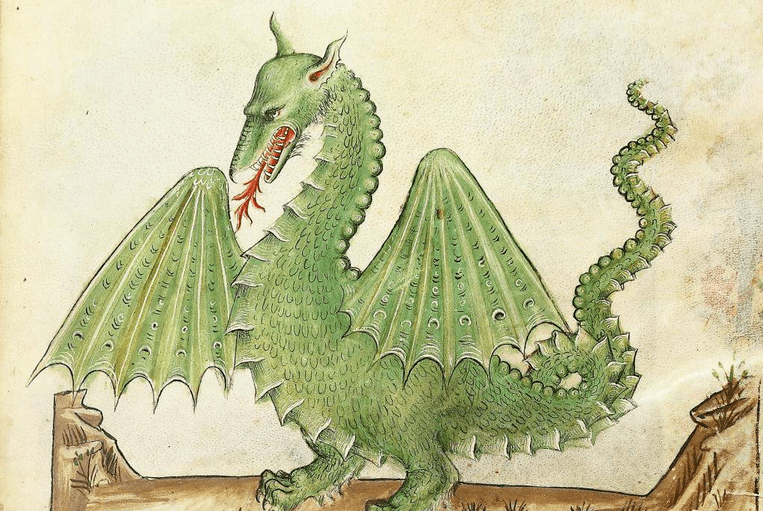
The Granddaddy of North American Medieval Conferences
In less than a week, I and a bunch of other medievalists from all over the world (though not as many international medievalists as in times past, unfortunately) will converge on the campus of Western Michigan University for the 61st International Congress on Medieval Studies. This is a huge conference of which, as a (very) early medievalist, I explore only a small part. Apart from connecting with friends whom I only see at conferences, and also apart from presenting my own research, I enjoy this conference because it is so unpretentiously, unashamedly all-in for every aspect of Medieval Studies imaginable. I have attended sessions on medieval board games — both games people played in the middle ages and modern-day games about the middle ages. I have attended multiple excellent sessions on teaching medieval topics at different education levels. Once I attended a fascinating session on color in medieval church architecture. (No, those churches weren’t meant to be gray.) I have attended theology sessions presided over by monks that discussed the sacramental theology of such figures as Peter Lombard and Hugh of St. Victor in excruciating detail. It is overwhelming, to say the least, but to me it can’t be called anything but fun.
This year, I will present my own paper for the first time in several years. I am writing about finding the theology of Christ (Christology) in the theological writings of early Merovingian Gaul (sixth century) that seem to avoid discussing Christology. The three other presenters in my session are speaking on depictions of the Trinity in early Christian and late imperial visual culture, poetic descriptions of church architecture as a signifier of virtue, and a liturgical discussion of the Syriac Life of Symeon the Stylite. What unites us is the time period and the broad theme of historical Christianity, but our disciplines, approaches, and questions are diverse. This kind of multidisciplinary setting allows for experts on certain subfields of medieval history (in this case Late Antiquity, spanning roughly from 250-700 CE and encompassing the entire Mediterranean world from the Middle East to Northern Europe and Britain) to think about their own research through the diverse vantages of other disciplines. It’s also really fun. I’m most excited about hearing what the art historian has to say about visualizing the Trinity.
Besides my own session, I am also looking forward to attending a session titled “Flesh and Form: The Marked Body in Material and Visual Culture” and a paper on touching relics in Merovingian Gaul (both topics relate to my own research). I’m also excited to attend some hagiography sessions and sessions on teaching Medieval Studies.
A Kalamazoo Story
I’ve been going to Kalamazoo off and on since 2014, taking breaks only to have children (except in 2015, when I brought my 3-week-old to the conference) or to attend other conferences. I love this conference so much that I wrote a novel about it for NaNoWriMo in 2017. And then I self-published that novel in 2021 when Kalamazoo announced that they would go virtual for two consecutive conferences (2021 and 2022) due to the COVID-19 pandemic.
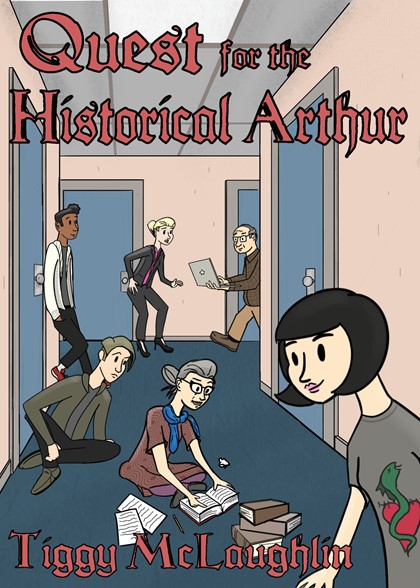
The book is starting to show signs of its age (both Valley III and “Medieval Twitter” are a thing of the past, iykyk), but it’s still a fun read. Anyone who attended Kalamazoo in the 2010s will get all the references, and even more recent pilgrims will enjoy the fun story about colleagues coming together to solve a somewhat fantastical King Arthur-related mystery.
Spoiler alert, it’s about multidisciplinarity. The main character is a young graduate student in history, but her own historical discovery is meaningless without the contributions of a medieval literature graduate student, his advisor who works on literary manuscripts, a late antique historian, an early medieval archaeologist, and another graduate student in late antiquity.
Quest for the Historical Arthur: A Kalamazoo Story continues to be available through retailers in both physical and eBook forms, but now you can buy the eBook right here for $4. (And for the week of the conference, May 13-17, it will be pay-what-you-wish!) Kalamazoo veterans as well as the Kalamazoo-curious can get their copy here.
What I’m Writing
Why, my Kalamazoo paper, of course! But what is it? It is actually part of the first draft of Chapter One of my book, God in the Flesh: Materiality and Christology in Early Merovingian Gaul (506-592), which I have recently submitted for consideration by a university press. I completed drafting the other chapters awhile ago and have spent the winter revising them after receiving feedback from several colleagues. All that remains is the Introduction (Chapter 1) and a Conclusion, and what better place to get feedback on a draft of a work than a conference? After Kalamazoo I plan to complete a finished and revised draft of Chapter 1, so that if the press does ask to see a full manuscript, I will have one ready in early summer as I promised in my book proposal.
What I’m Reading
I’m reading the next book in Megan Whalen Turner’s “Queen’s Thief” series, Thick as Thieves, and I’m enjoying it as much as the others. The writing is slow-going and rich in character development, which I love, but it also means I need to have another novel going at the same time. I also appreciate the unexpected twists that happen in Turner’s books. I just read that twist last night, and now I’m really eager to see how it resolves.
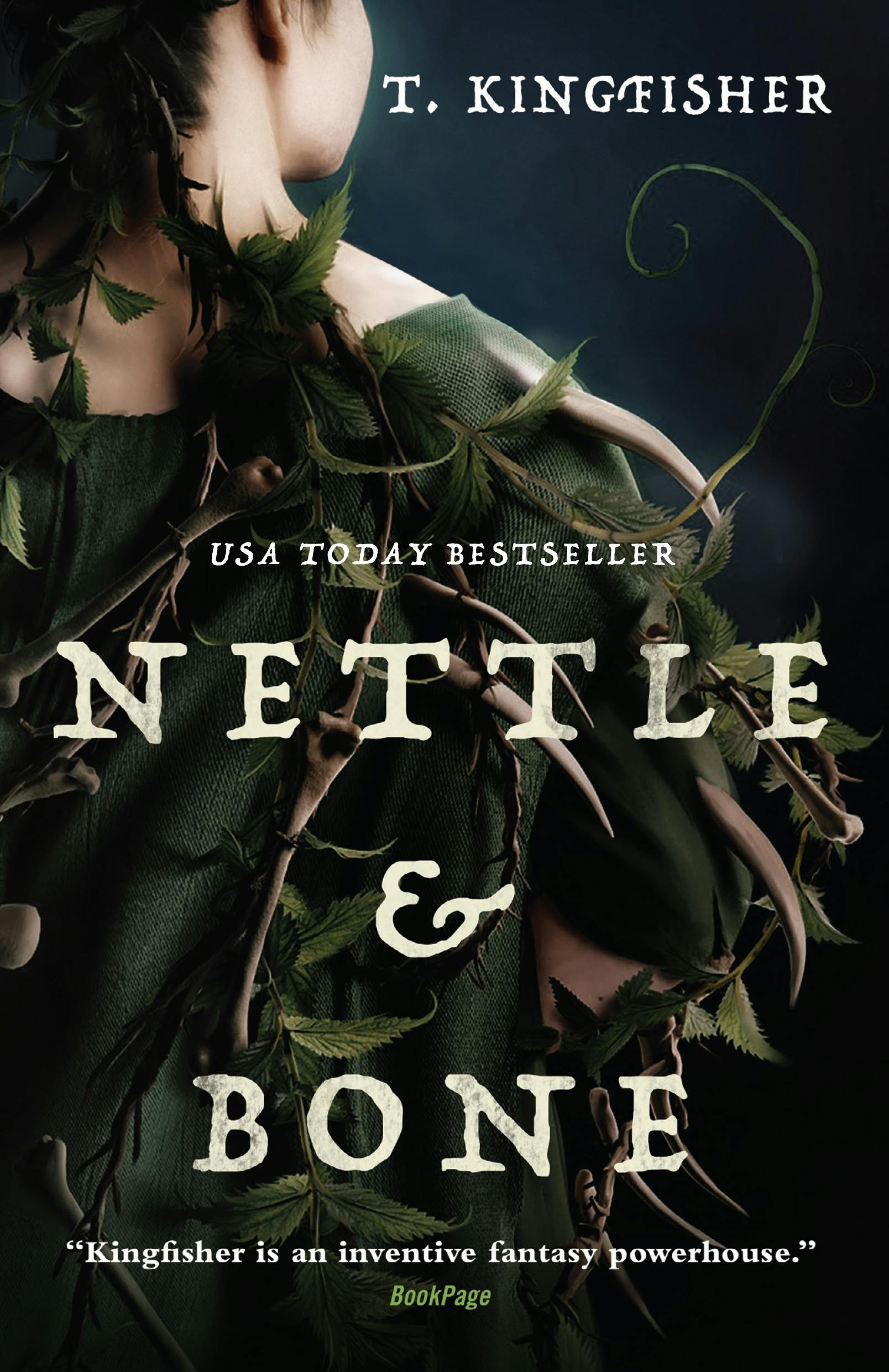

The other book I’m reading it Nettle and Bone by T. Kingfisher. I had been wanting to read a Kingfisher book for awhile because I hear good things, and this one happened to be in stock at the independent bookstore I visited for Independent Bookstore Day a couple weeks ago. I’m not very far into it, but I like the mysterious vibe and the multiple timelines.
Breaking the Silence Update
We are inching closer to the publication of Breaking the Silence, which will take place in early summer. Subscribers will see an early notification when it is available for retail, but you can preorder your copy directly from me now. All preorders will be signed. Get yours here.
 Tiggy McLaughlin
Leave a comment